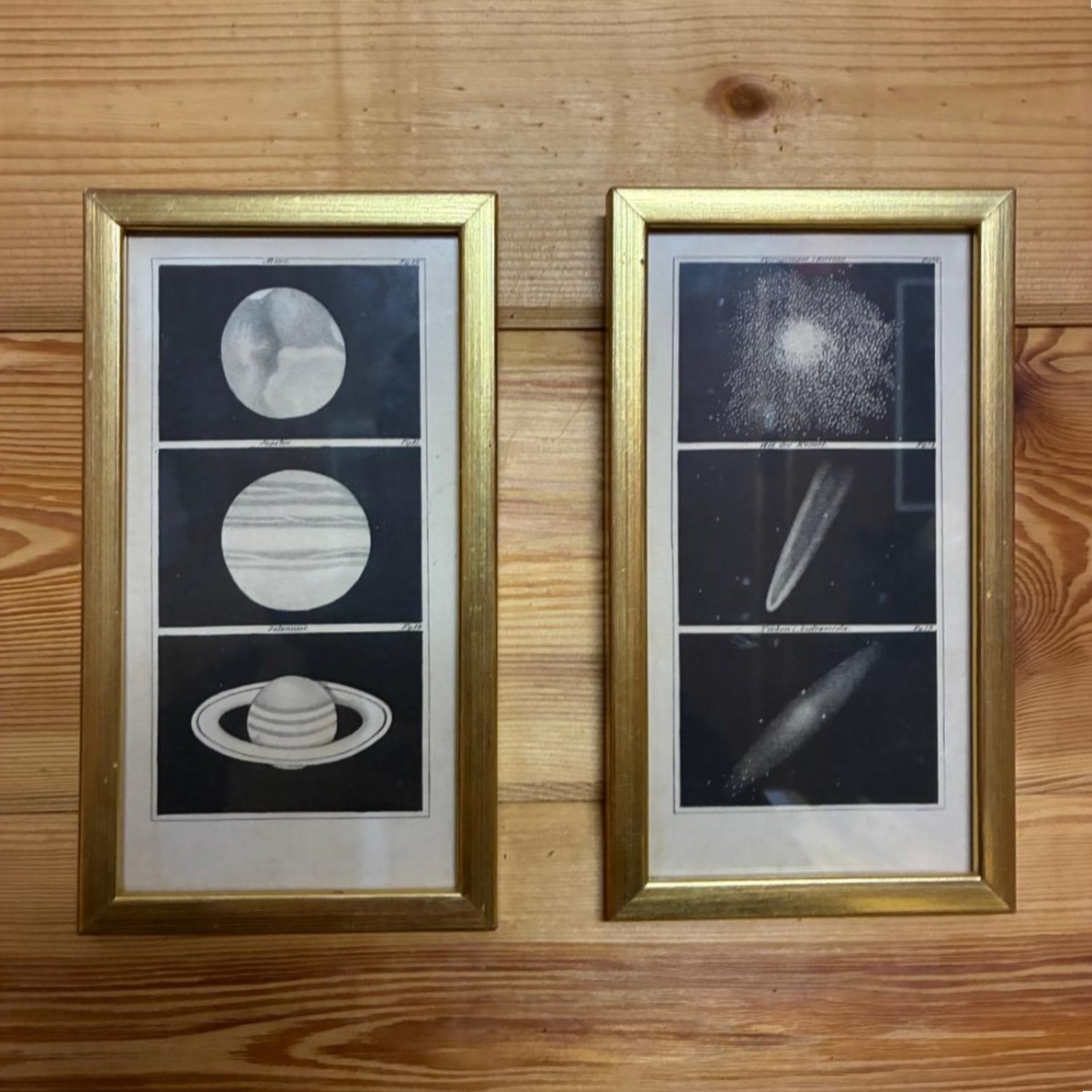
Being part of a local astronomy club is very rewarding.
Some evenings, I help out at the observatory by guiding visitors through the night sky.
Our visitors may be from other clubs,
school classes, or simply groups of curious people.
When we're looking at the night sky together, there's a sense of awe.
Seeing more objects through a telescope than one can truly grasp, evokes an inspiring yet humbling experience.
I often encounter baffled reactions to just how vast the universe is when we speak of distances in light-years.
They usually ask "Are we alone? Could there be more life out there?"
This night, the sky was covered with thin clouds with occasional clearings.
Under such conditions, I would normally pack up, but we decided to try anyway.
We managed to observe some deep sky objects and the moon.
Then there was a young boy, perhaps 8 years old. After he looked at the Moon through the telescope,
he began to quietly talk about another moon, "So now we've seen the yellow Moon. Where is the other red one?”.
“The other red Moon?” I asked, a little hesitant.
I felt a small urge to explain that we only have one, but I wanted to hear how he was thinking.
He seemed a little unsure as he told his story,
but explained that he had read a book with pictures of our moons. One red, and one yellow.
The moons were opposite each other, with Earth in between.
At first, I thought to myself that maybe he had read some kind of science fiction book,
but as he described the alignment, it suddenly made sense.
When he had finished, I answered carefully, “That yellow moon is actually the Sun. And when the Earth is between the Sun and the Moon,
the Earth's shadow falls on the Moon. But some of the sunlight bends through Earth's atmosphere and reaches the moon's surface
and it's this light that gives the Moon its red color. We have only one moon but it can 'change color'.”
The book he had read described the phenomena of a lunar eclipse, often referred to as a “blood moon.”
(The color usually vary in different shades of red, or in very rare cases blue, depending on the conditions of Earth's atmosphere.)
Seeing his expression light up as he understood took me by surprise.
He repeated, “So it was the Sun I saw — we only have one Moon!”
There are many young children who know so much about space.
Meeting and talking with them is one of the most enriching experiences.
They know much more than I knew at that age and I'm beyond impressed by their ability to learn.
At times it feels as though I am learning just as much as I am guiding.
It is heartwarming to be able to share these moments, they are truly memorable.
The imagination begins to wander
I met a school class of very young students a few weeks ago.
It turned into an intense evening filled with questions and lively debates.
Three young girls, in particular, wandered so far into their imaginations that they almost seemed to scare themselves.
It was genuinely fascinating to engage with them. One of the girls described ideas closely resembling
special relativity, without ever naming it. Her reasoning and logical approach felt almost genius-like.
She didn't just recall facts; what truly stood out was her ability to think independently, to reason
her way toward conclusions, showing a deep understanding of what she was talking about.
And these students were around nine years old!
The girls spoke about our existence in the universe, about black holes, and what might happen
if we approached their edges. At one point, one of the youngest girls became visibly frightened.
She imagined herself floating endlessly in the darkness, unable to return home, trapped inside a black hole and other
dimensions.
These were remarkably deep conversations. I tried to explain that we can find some comfort in the
curvature of spacetime keeping us safely on Earth. There is one way to explore possibilities
without physically traveling there ourselves, since we don't yet have all the answers ( and this is precisely what makes
it so exciting to learn more). And how do we do that? We learn mathematics. I also reminded them that the universe itself does not depend on mathematics to
exist, the world would still exist without it. Math is simply a universal language we use to understand how our world work.
So we (humans) keep working on equations, and perhaps more importantly, we learn how to perceive them.
At the end, I learned that their parents were scientists and engineers. The girls laughed and said, “We have to learn
more math so we can live up to our parents!”
It's very human to feel lost, or even afraid, when thinking too much about space. Much of it is unknown,
and some people might even choose to ignore it. It's very different from watching a movie, you're out there,
gazing up at something unimaginably immense, a world hidden in the darkness, and
your imagination begins to wander. We are all different in how we approach these thoughts,
and for some, not thinking about these things at all may be the easiest way forward.
But when I meet people who remind me of myself, perhaps spiraling too much in their thoughts about space,
I can't help but feel amused at how relatable it is.
When I was explaining our place in the universe and how one might look at it, I also realized that I was speaking only
from my own point of view, shaped by the knowledge I've accumulated. It's difficult to remain strictly within the
realm of science without bringing in questions of meaning or philosophical
perspectives.
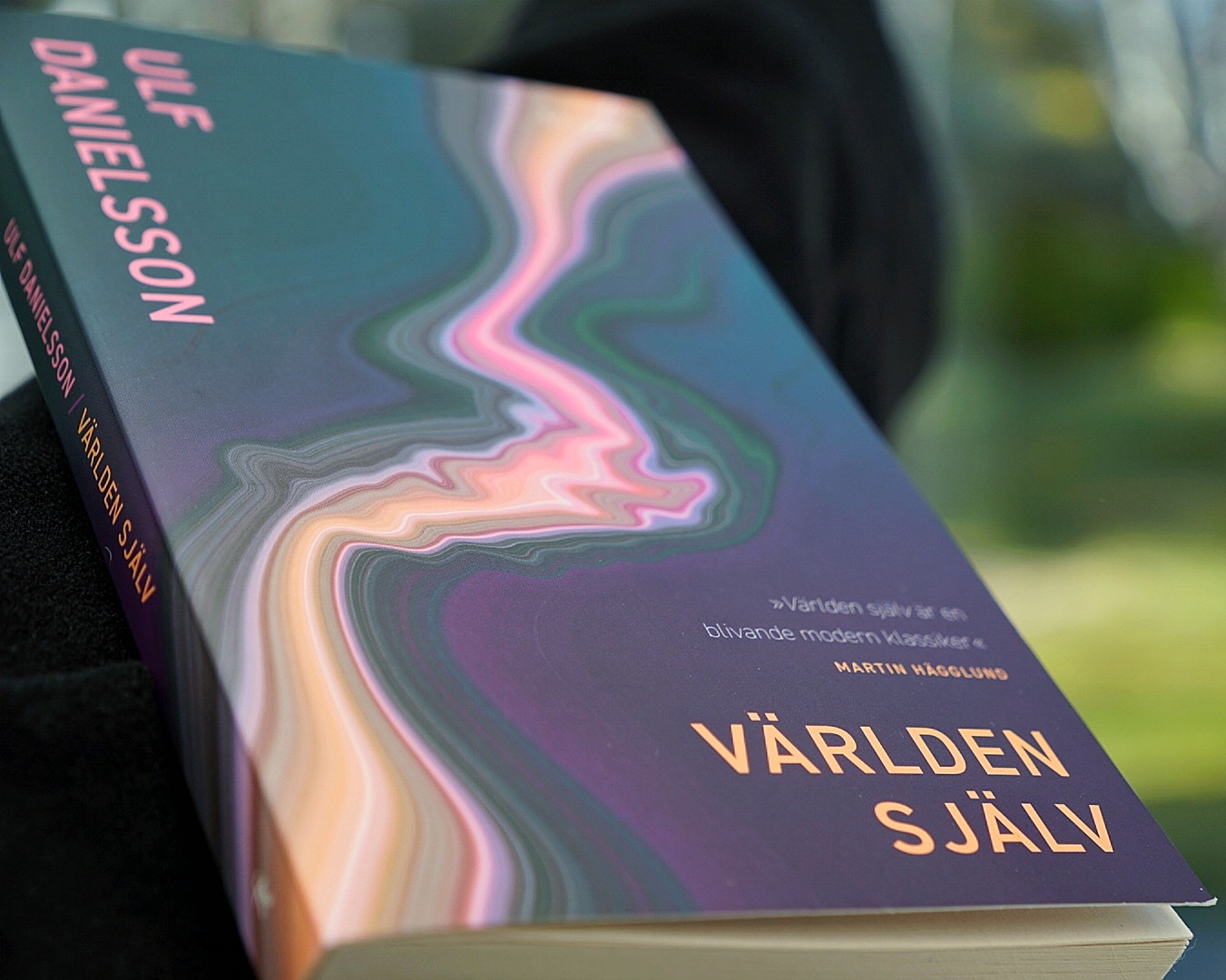
A couple of weeks later, I happened to stop by a bookstore and came across a book by an author I really like.
It's exactly about these questions we were discussing. I think I'll return to it and try to draw some parallels,
exploring how one might understand and possibly merge different philosophical perspectives.